

Absolute paths
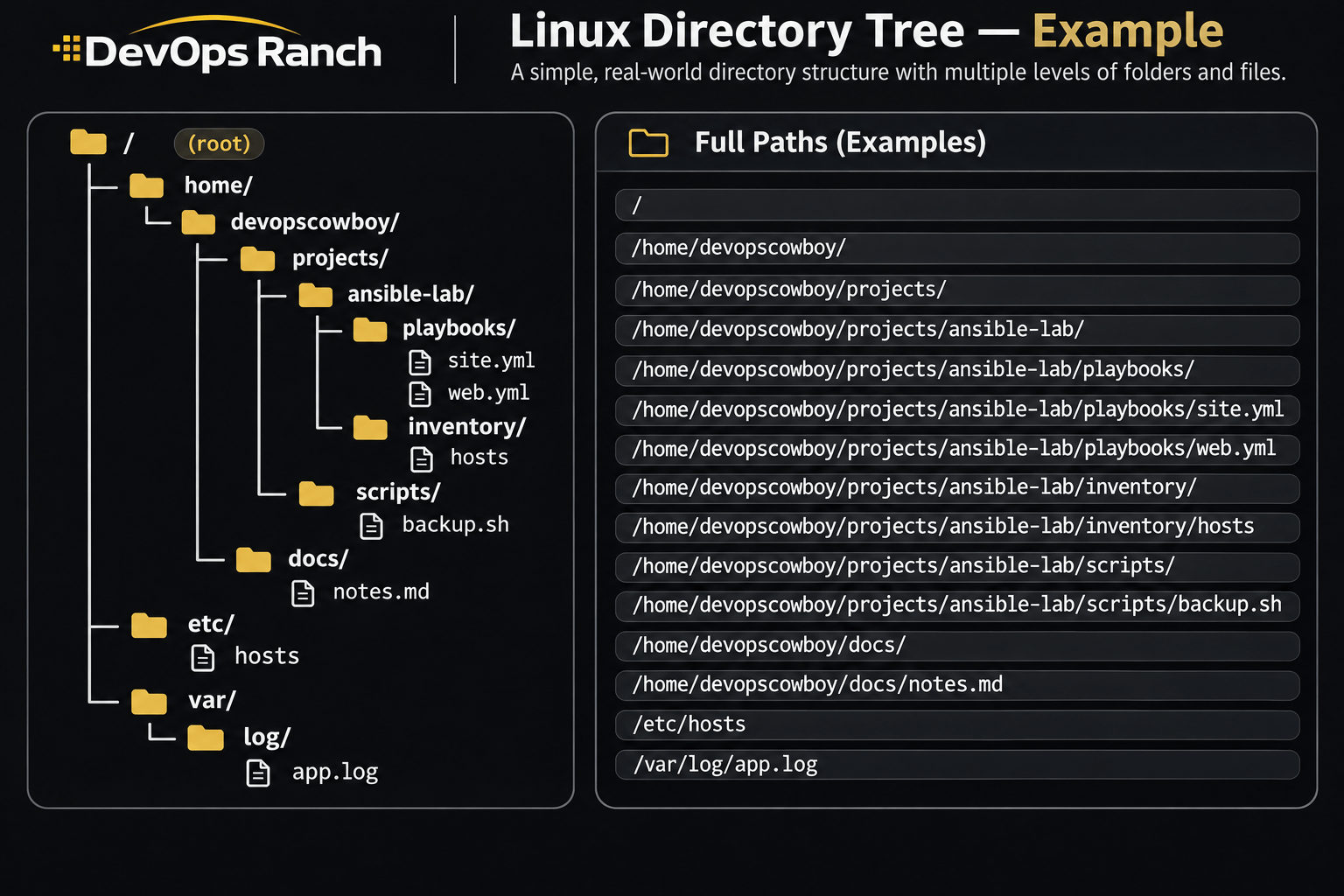
An absolute path starts with /. That slash is the root, the top of the filesystem, and the path lists every directory from there down to the file. It names the same place no matter which directory you are in.
A relative path has no leading /. It starts from the directory you are in now, the one pwd prints.
Cheat sheet
Shell
Arguments, tests, redirection, and the exit status of a short RHEL script.
On this page
Arguments, tests, and redirection
These are the pieces a short RHEL script actually uses. Quoting, a test, and where the output goes.
printf 'first %s\n' "$1"
printf 'count %s\n' "$#"
printf 'arg %s\n' "$@"
"$1" is the first argument. "$#" is how many arguments there were. "$@" is every argument, each as its own word. The quotes matter when an argument contains a space.
[[ -d /path ]]
[[ -f /path ]]
[[ -n "${1:-}" ]]
name=$(whoami)
[[ -d ]] is true when the path is a directory. [[ -f ]] is true when it is a regular file. $(whoami) runs the command and keeps what it printed. ${1:-} is an empty string when $1 was not set.
cmd > out.txt
cmd >> out.txt
cmd 2> err.txt
cmd > all.txt 2>&1
printf '%s\n' "$?"
> writes standard output to a file and replaces that file. >> appends. 2> is standard error. 2>&1 sends standard error to the same place as standard output, and it has to come after the > that sets that place. $? is the exit status of the last command. 0 means it worked.
set -euo pipefail
At the top of a script, -e exits when a command fails, -u errors when a variable is unset, and pipefail makes a pipeline fail if any stage fails. -e does not fire inside an if test.
On RHEL 7, 8, 9, and 10, sed is GNU sed. sed -i 's/old/new/' file edits the file in place. sed -i.bak keeps a copy named file.bak.